The most direct method to travel from Budapest to Zagreb, Croatia is by bus (about five hours) which was easy enough except for what ended up being an hour stop at the border.
While that day we were due to meet up with Abby’s mom, Diane, and stepdad, Morgan, to travel to eastern Croatia before crossing the border into Bosnia & Herzegovina (which we’ll refer to as Bosnia from this point forward), a missed flight connection due to a delay in Paris meant the two of us were solo for the night. We were hoping to explore during our short time in Zagreb but it rained without letting up for nearly 48 hours. So after a quick walkthrough the city the next morning, we headed to the Zagreb Airport to meet up with Diane and Morgan before hopping in a rental car.
Back in the early 1990s Morgan worked as a field reporter during the Yugoslav Wars and spent time on the front lines in Croatia near the Serbia border which saw heavy fighting throughout the conflict. We wanted to visit the same area he covered just 30 years prior so our plan was to stay the night in Osijek before spending the following morning in Vukavar, right across the Danube River from Serbia.
Despite driving three hours in the heavy rain, we made it to Osijek in one piece and had a memorable stop over in Vukavar (and finally managed some sunny weather). 30 years later the war scars in the city were glaring, ranging from bullet holes in the sides of buildings to structures fully blown out from mortar fire. Seeing this kind of destruction alongside everyday untouched buildings in what is now a fully functioning, albeit lower socioeconomic, town was fascinating.

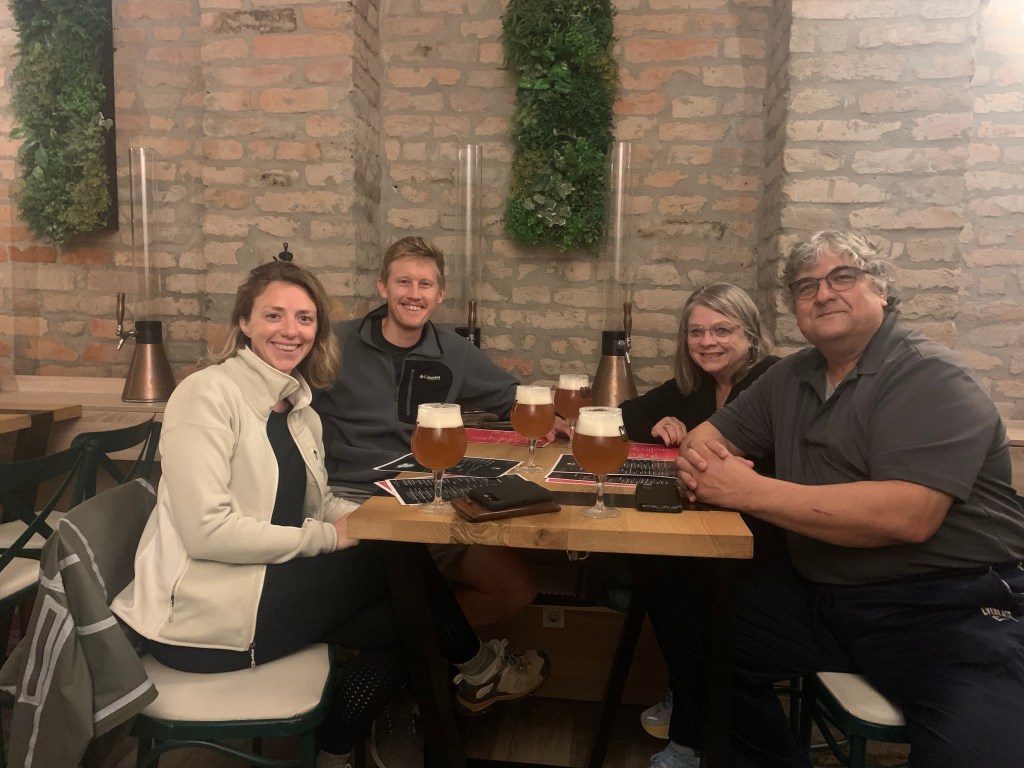

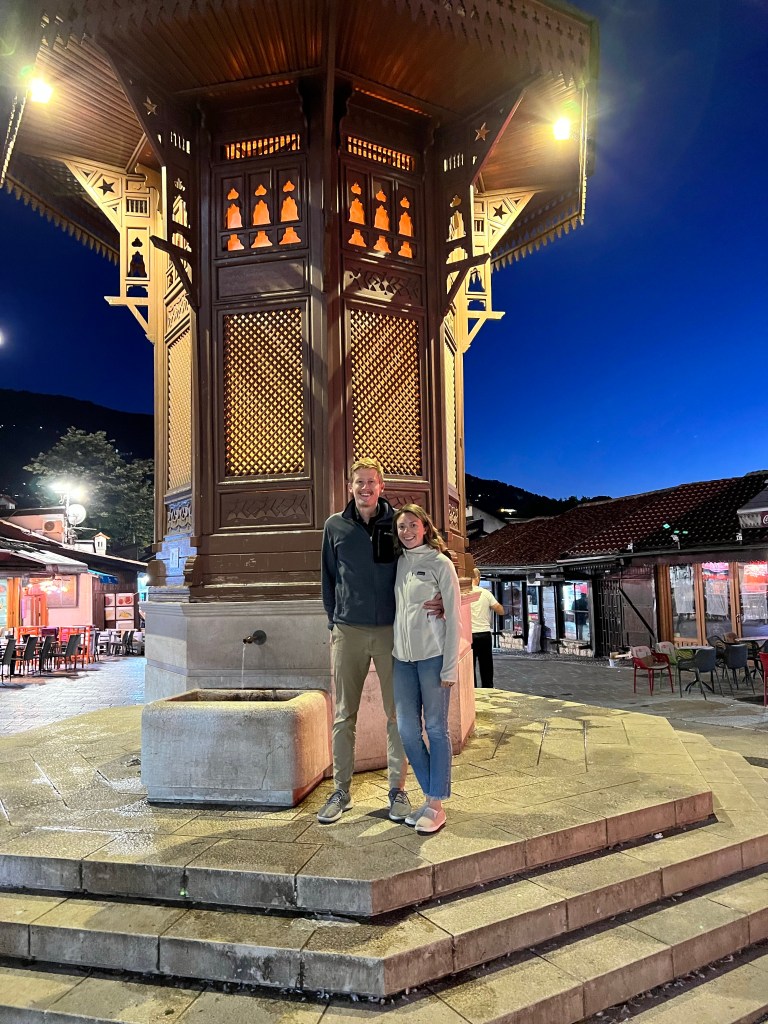
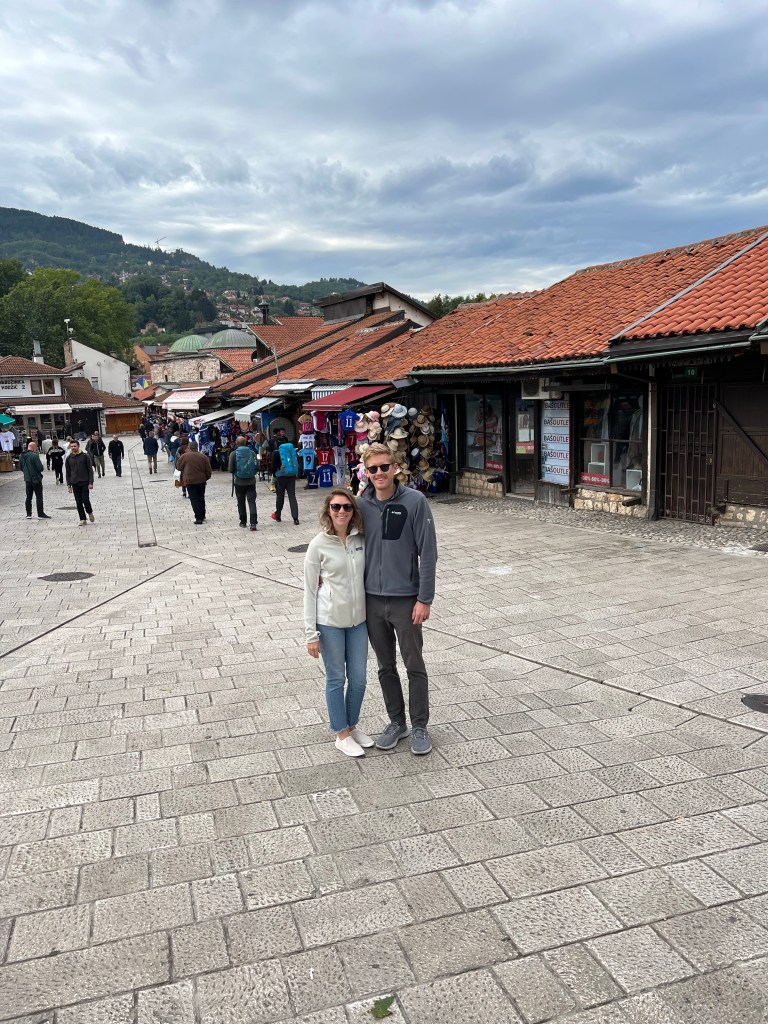
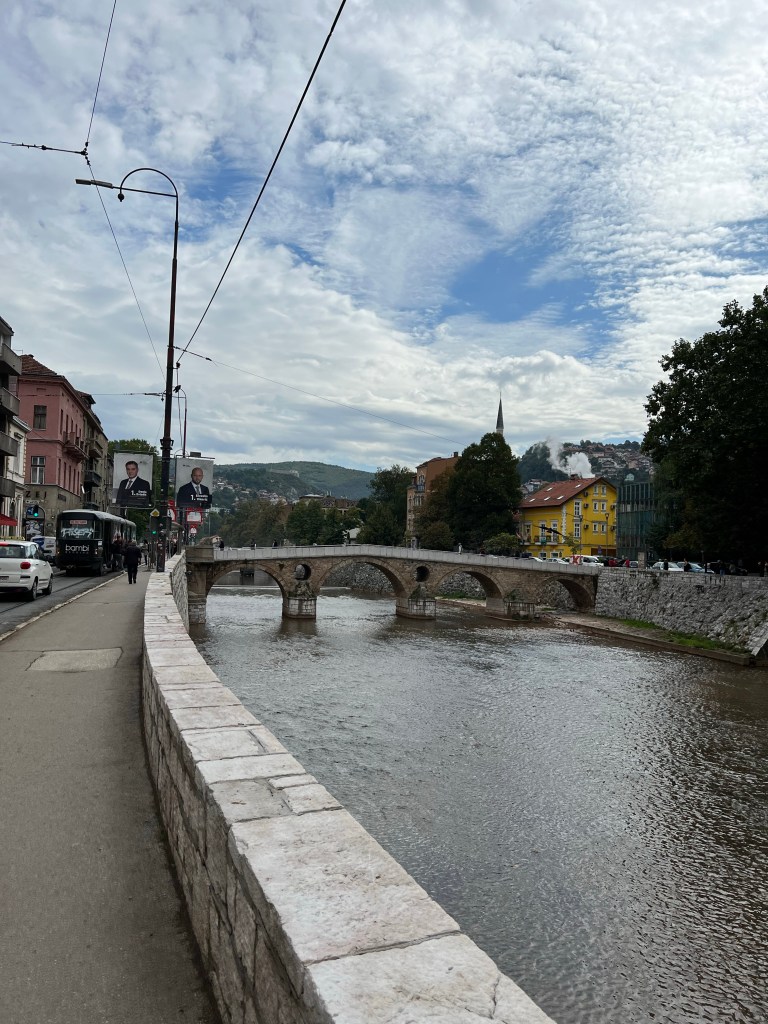
After touring around Vukavar, we headed to Sarajevo, Bosnia – about a five hour drive. Crossing into Bosnia you immediately notice the heavy concentration of mosque minarets (Bosnia is about 50% Muslim) as well as how much earlier the country is in its post-war development compared to Croatia. As we arrived on the outskirts of Sarajevo we quickly found that Google does not invest heavily in the accuracy of Maps in the area – we were routed and rerouted over and over through hillside neighborhoods and one lane roads. Regardless, after a lot of close calls and going back and forth with our very sweet Airbnb host we finally made it. While we unfortunately arrived during a cold rainy spell, our short time (2 nights) in the city was unforgettable and unlike anywhere we had ever been before. The melting pot of cultures and religions combined with a large city still recovering from a nearly four year siege during the Bosnian War, that only ended in 1996, will stick with us for a long time. We recommend visiting the Museum of Crimes Against Humanity and Genocide 1992-1995 to get perspective on how the atrocities from the war impacted the Bosnian people.


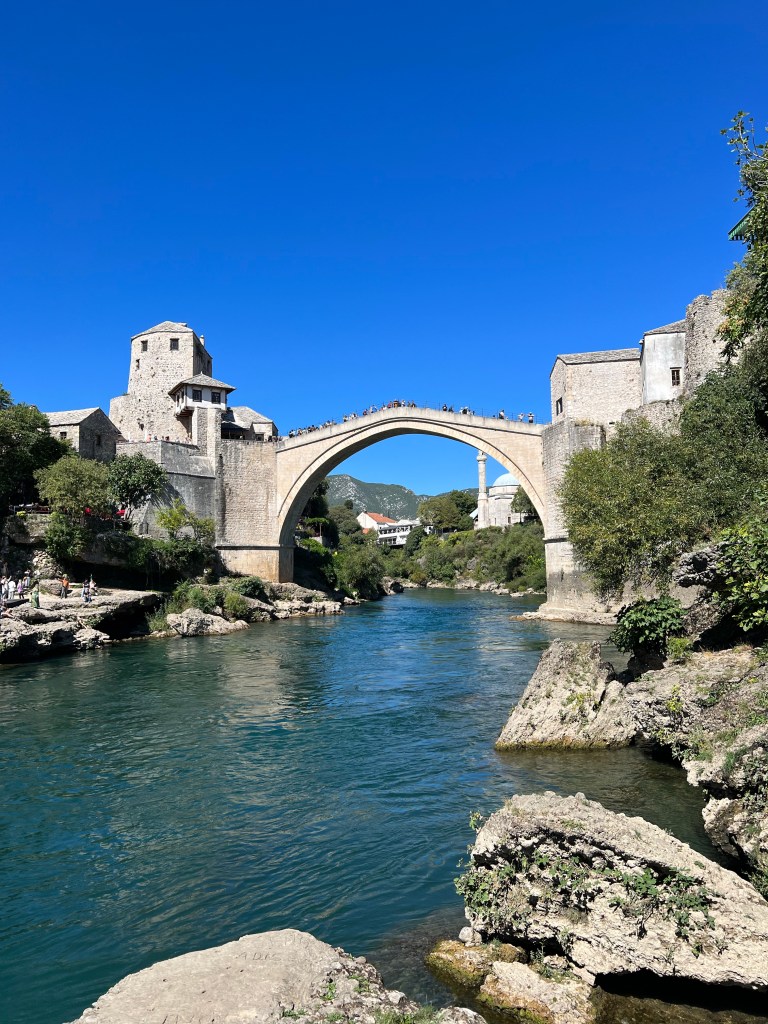
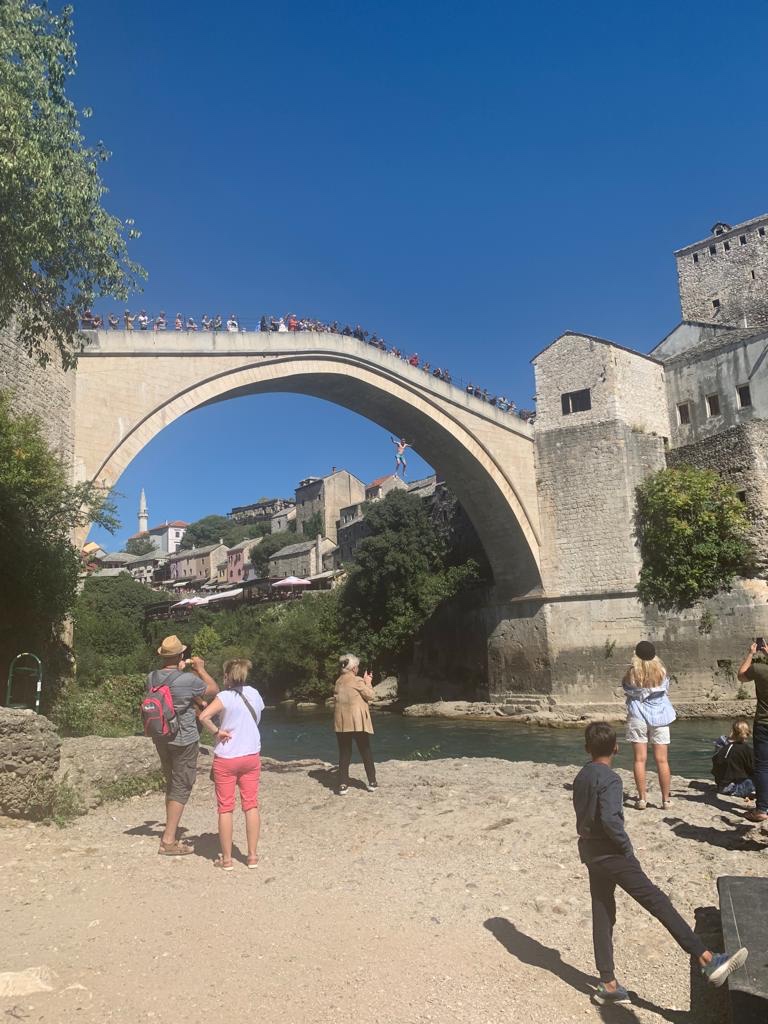
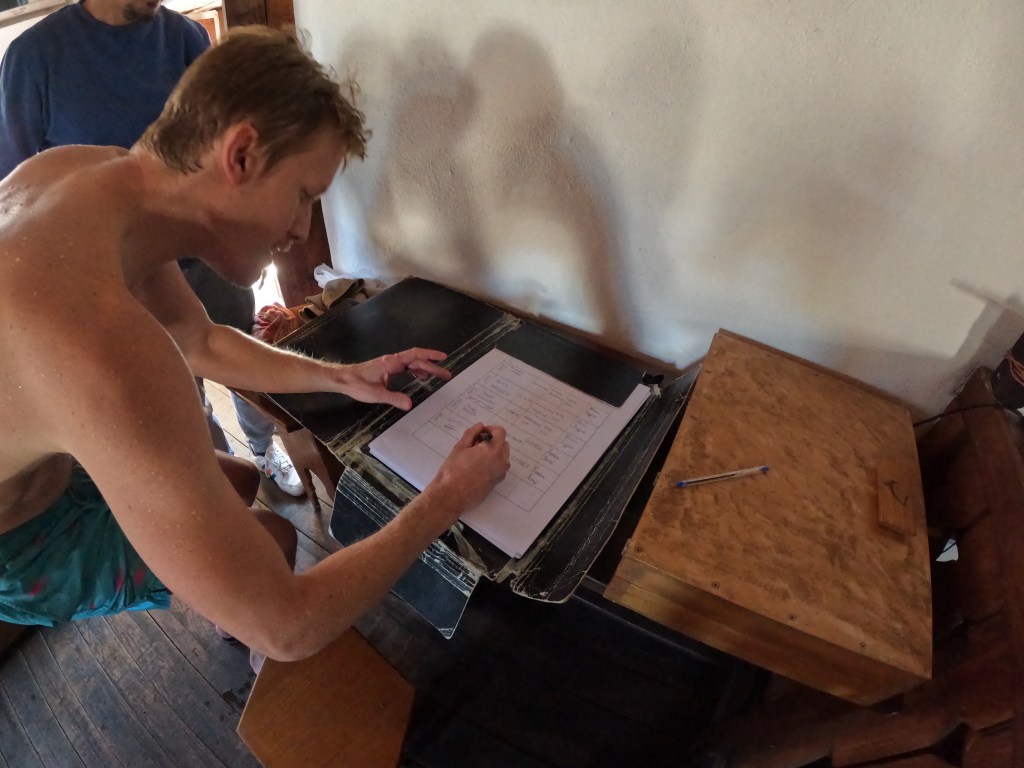
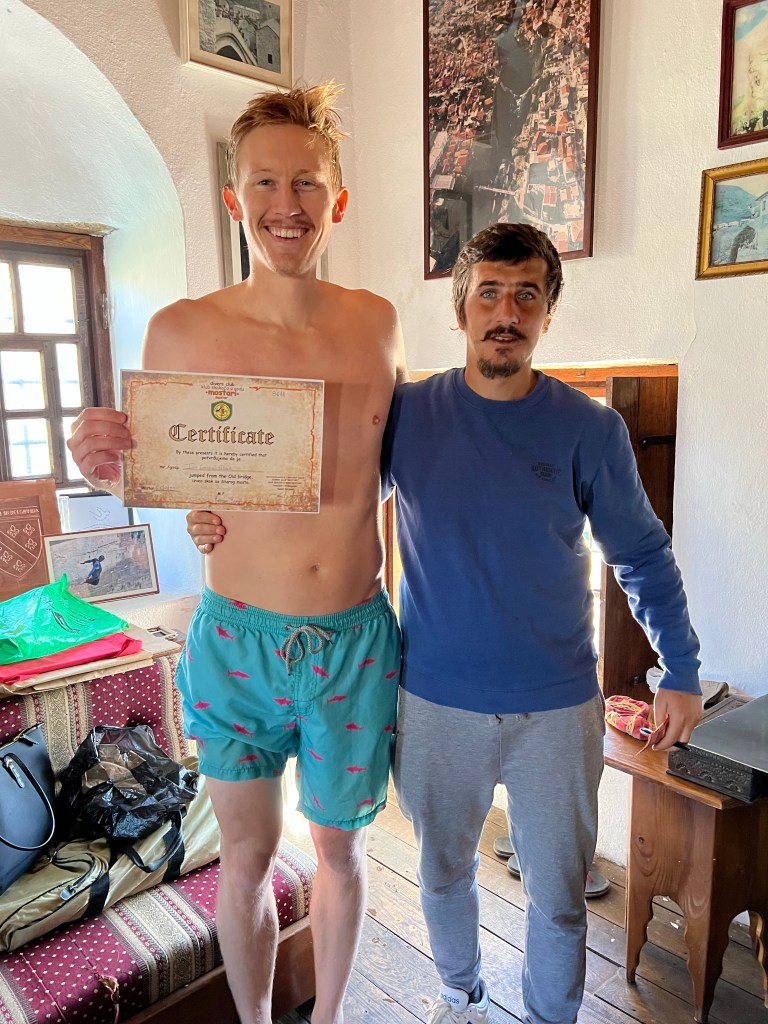
Before crossing the border into coastal Croatia along the Adriatic Sea, we had longed planned to stop in a town called Mostar, about a 2 hour drive southwest of Sarajevo. In addition to being a very charming historic city, it has a popular tourist attraction called the Stari Most Bridge which crosses the Neretva River cutting through the middle of town. According to all the blogs we read, the thing to do (if you’re ok with a bit of risk) is walk into the Mostar Dive Club and ask to jump off the bridge….25m (~82ft) into the river below. Weeks before Abby challenged Ian to take the plunge and after only a little convincing, he obliged. Upon arriving in Mostar we found the small dive school building at one corner of the bridge and Ian was on his way. Ian first had to do a handful of practice jumps on a lowly 17m (~55ft) platform down river from the bridge. Once the diving club member said his form was “good enough” we headed back up to the bridge. Given the bridge is a big tourist attraction, when someone is about to jump a crowd begins to form – phones and cameras out. Ian’s jump was no exception…Mostar celebrity in the house! Beyond some inevitable soreness and bruising after, Ian got through the jump injury free to cheers from the crowd, mostly from Abby of course 🙂 . Once someone successfully jumps they become an honorary member of the Mostar Dive Club, sign a member book, and receive a certificate. Between the practice jumps and bridge jump you have to pay €35 to the dive club, but after becoming an honorary member, you jump free for life. Ian is unsure if he will take them up on that offer but a memorable experience and awesome conclusion to our time in Bosnia!
Next stop, coastal Croatia! Dubrovnik, Split, and Korčula Island we’re coming for you!
 Now or Never
Leave a comment