There are a few different ways to travel from northern Thailand to the top Laos tourist destination of Luang Prabang, but the undisputed right of passage is braving a two-day slow boat down the Mekong River. The journey starts from the Laos border city of Huay Xai, a sleepy little town with a handful of guesthouses and restaurants that survive off foreigners taking the slow boats or visiting a nearby gibbon reserve. There are two options for booking the slow boat, you can hire a tour company to organize the trip from end-to-end on a private boat, or simply show up and buy tickets to the daily public boat in person. Considering the cost was nearly $200 vs. $18 per ticket, we elected for the latter. We crossed into Huay Xai from Thailand the night before we planned to go so we could buy our tickets early and just take it easy in the morning before setting off.
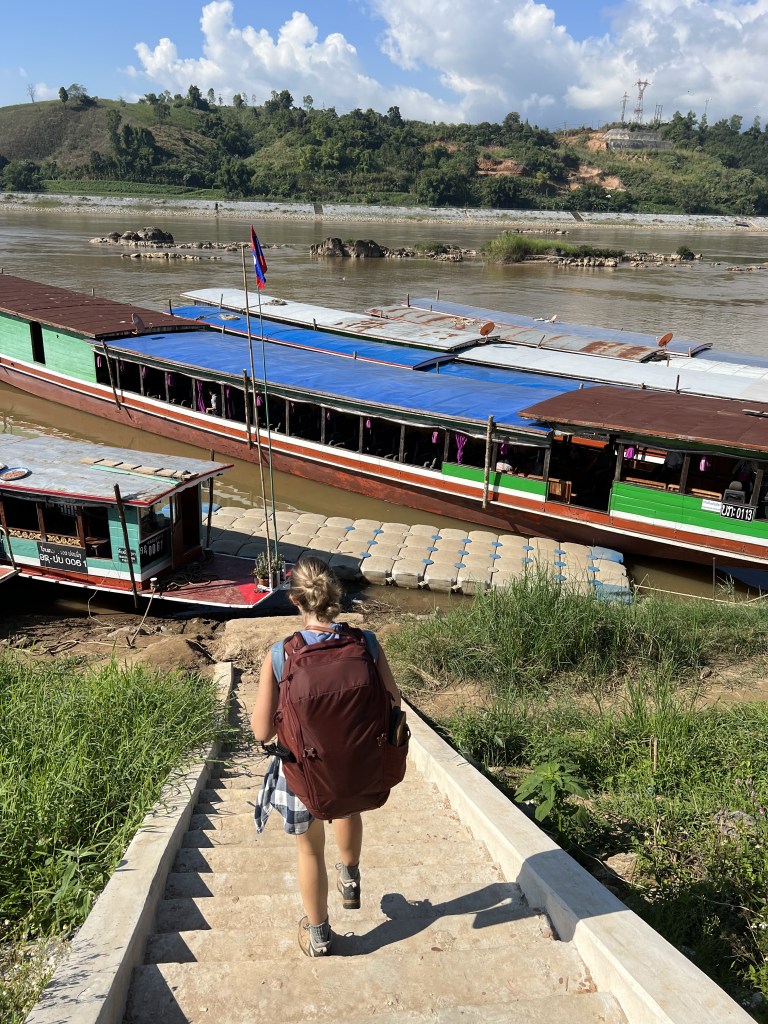
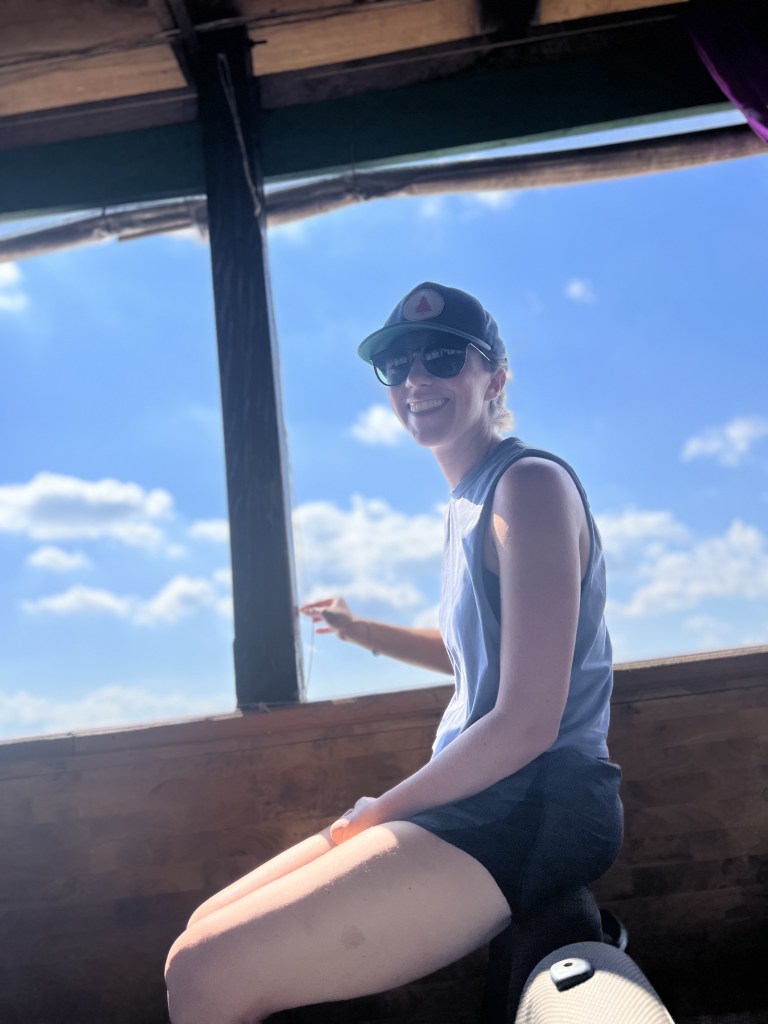
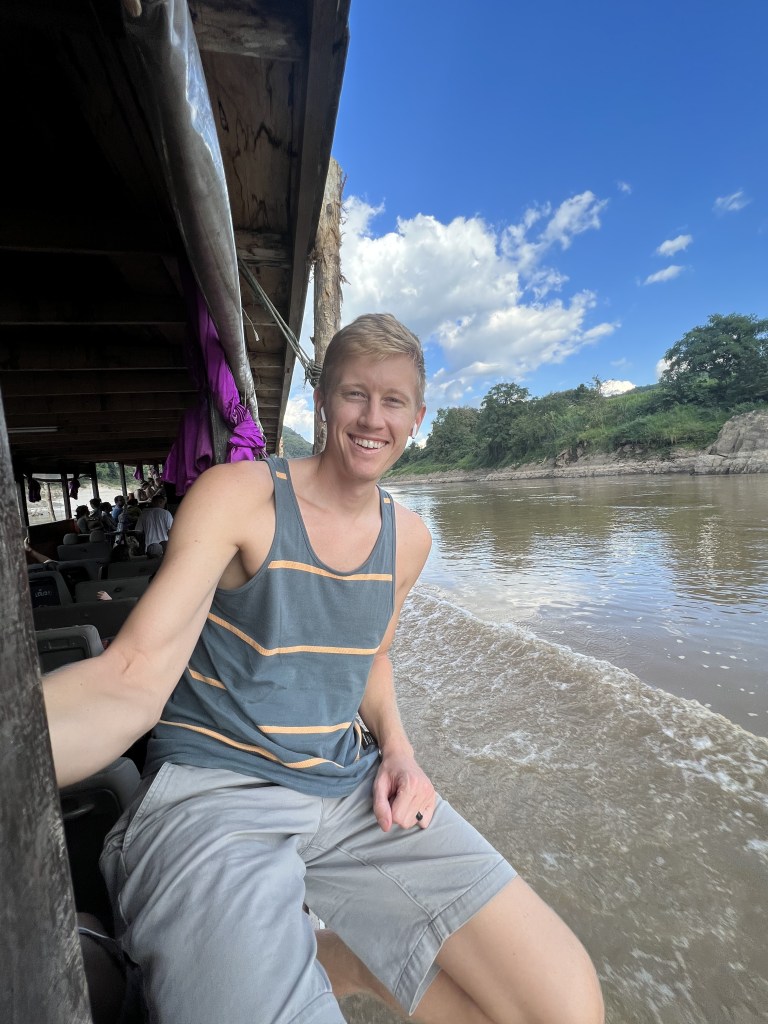
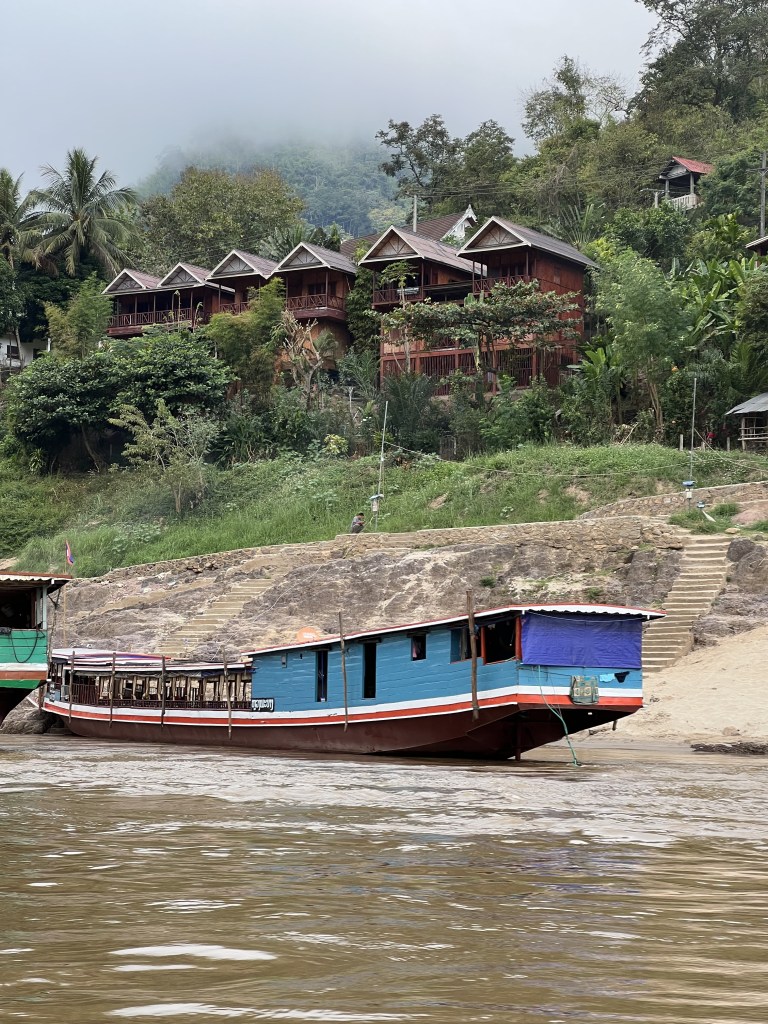
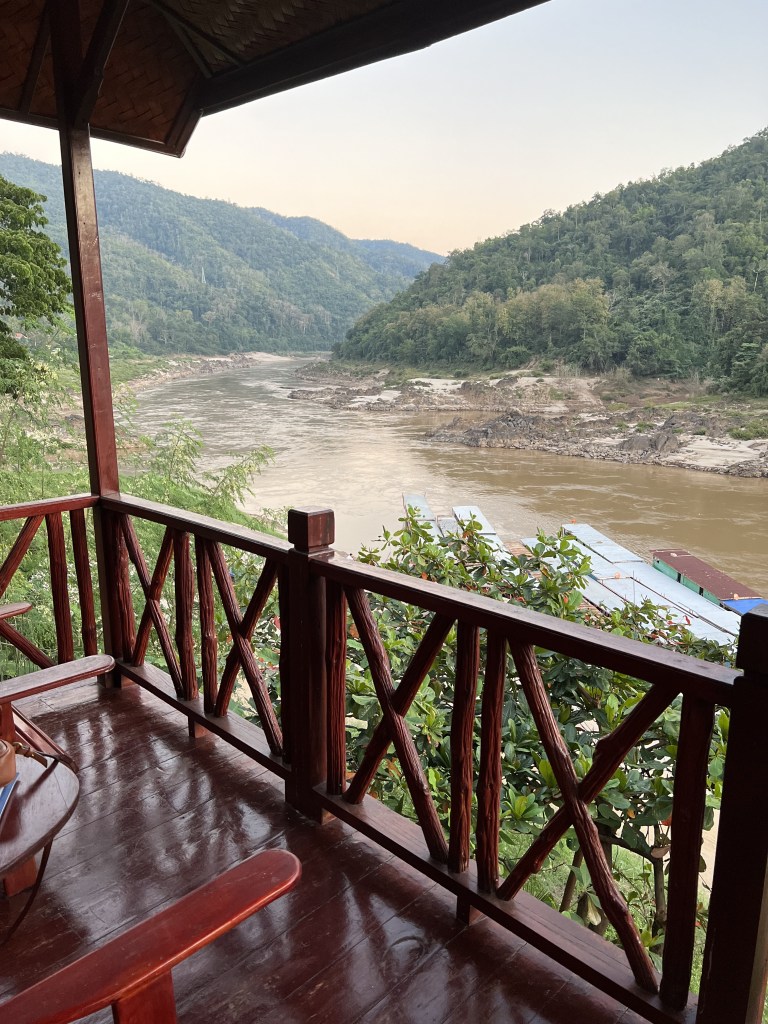
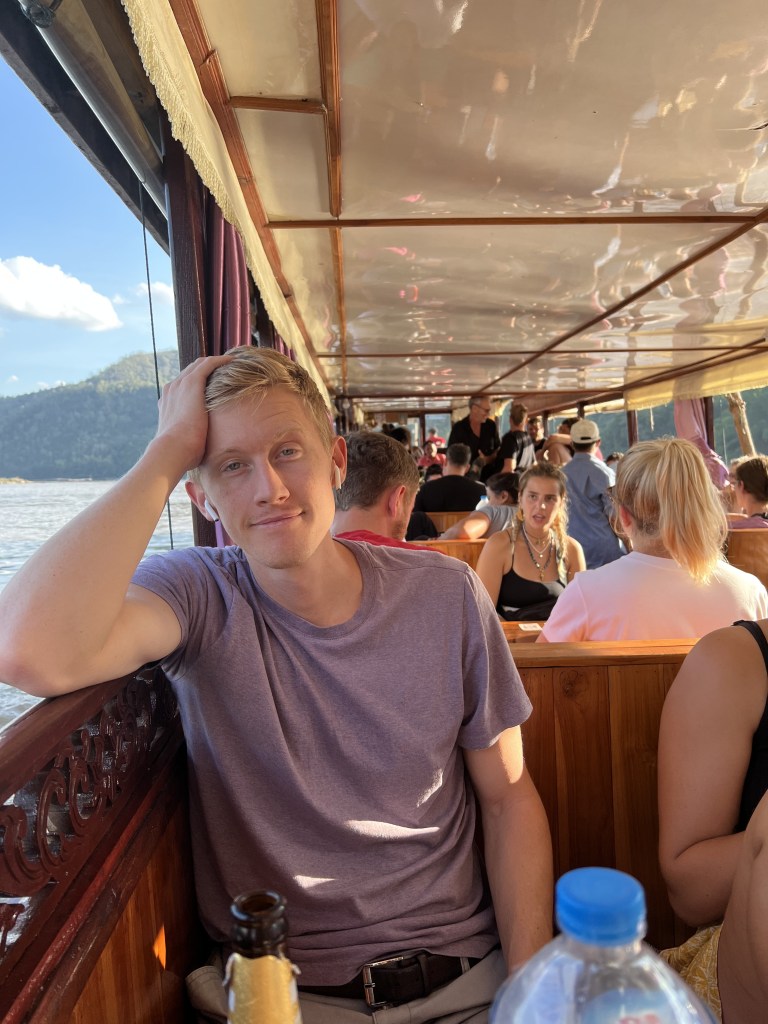
The slow boat itself is long and narrow with old car seats bolted to wood planks lined up in rows. We estimate that the passenger capacity was somewhere between 100 and 150 people. While there were a handful of locals on board, a vast majority of passengers were (mostly European) foreigners and young backpackers. The first day of the journey took about six hours through some amazing scenery before we docked in the small riverside village of Pakbeng for the night, which, similar to Huay Xai, caters almost exclusively to slow boat travelers. Our riverfront accommodations were rustic but comfortable enough and offered up some great views of the Mekong. After a so-so night sleep we were back on the river at 9am on a different, and seemingly smaller, boat. This time we made some friends with a few fellow travelers and passed the time playing cards (‘Shithead’ is our new favorite game). Eight hours later we arrived on the outskirts of Luang Prabang and jumped in a tuktuk into town to meet up with Ian’s dad, David, and stepmom, Dianne who flew in the day before. Overall the slow boat trip was definitely long and tiring but well worth the experience.

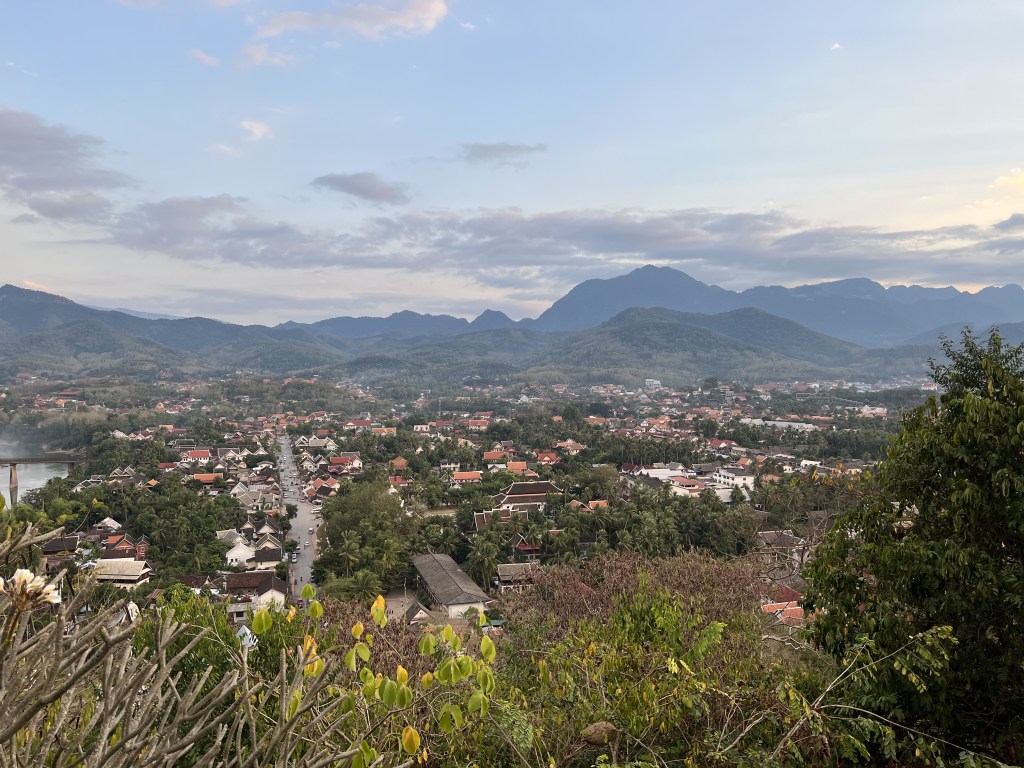
Luang Prabang is a small city of about 50,000 people and was described to us as a tourism bubble within Laos. The streets are spotless and there are hip western-style restaurants/cafes everywhere with a notable French architectural influence from the days of colonization. It was easy to forget we were in the middle of a developing country. There is plenty to do both inside the city as well as the surrounding area and thanks to David and Dianne pre-booking some tours we were able to take full advantage of our three days there.
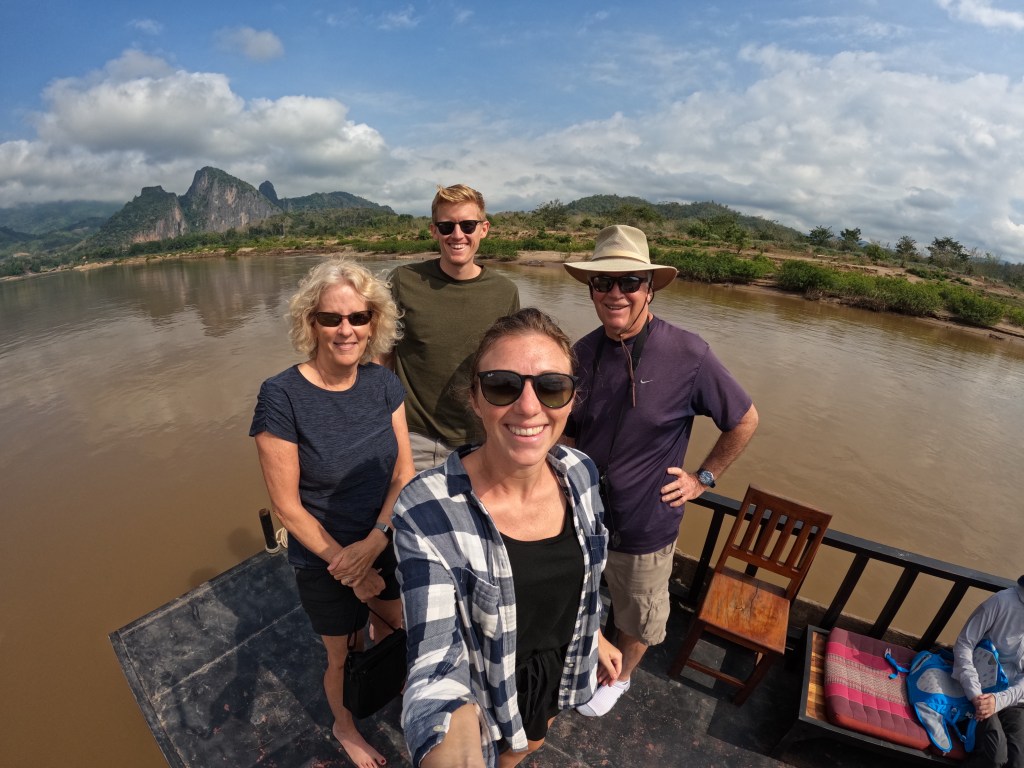
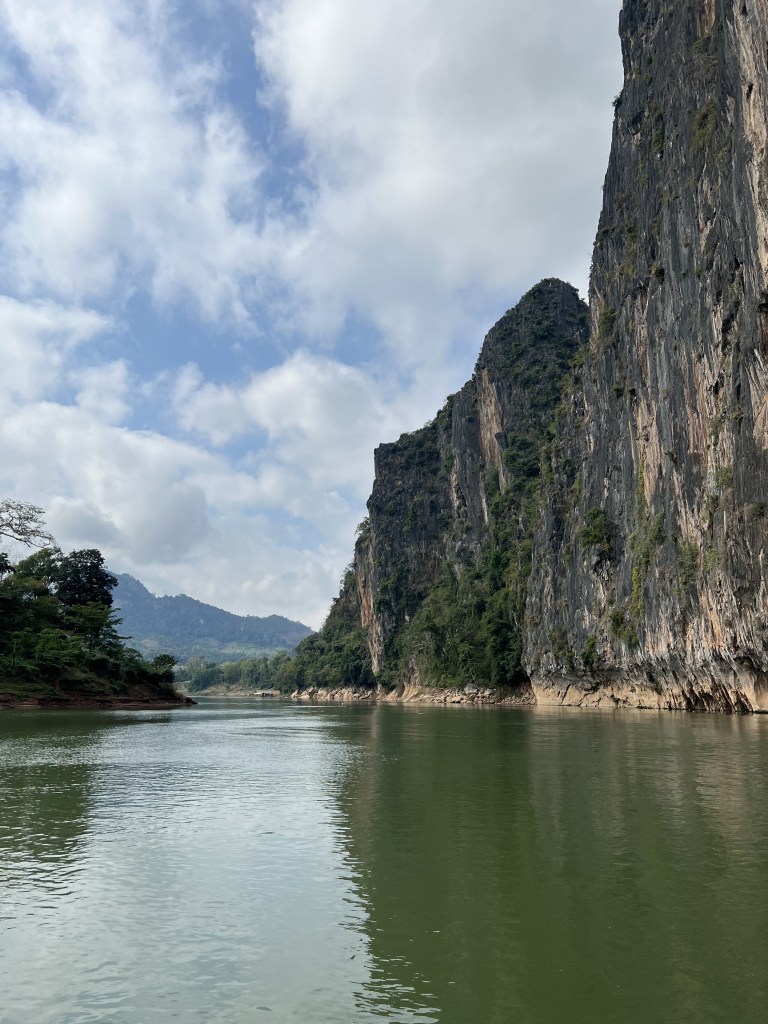
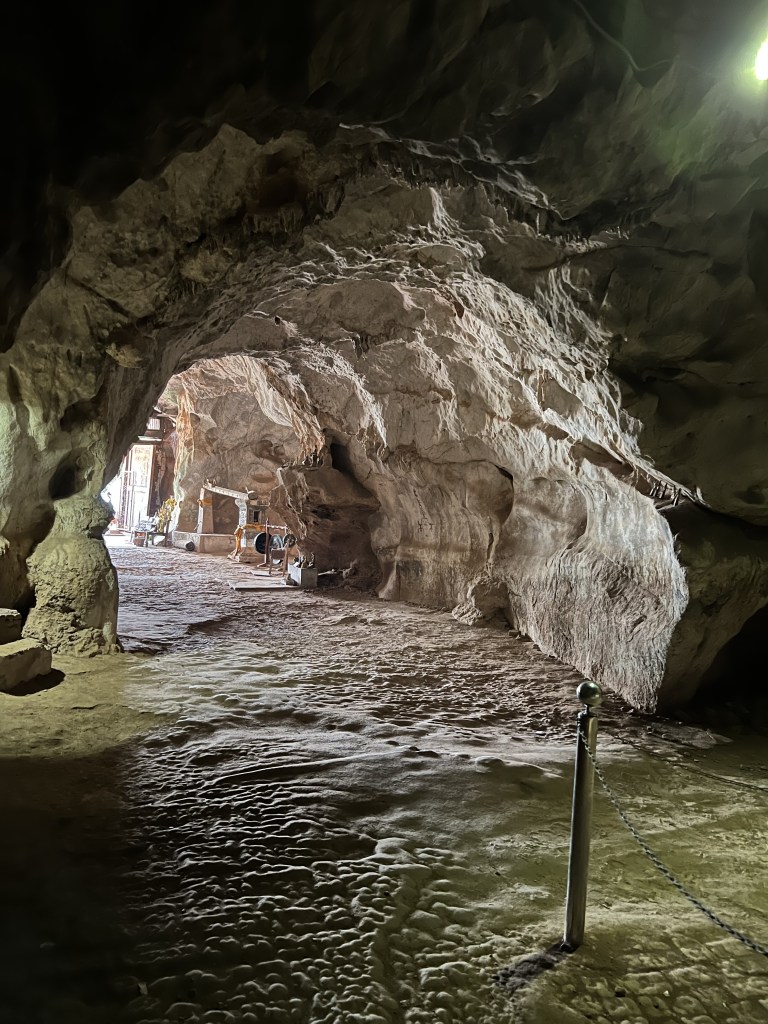
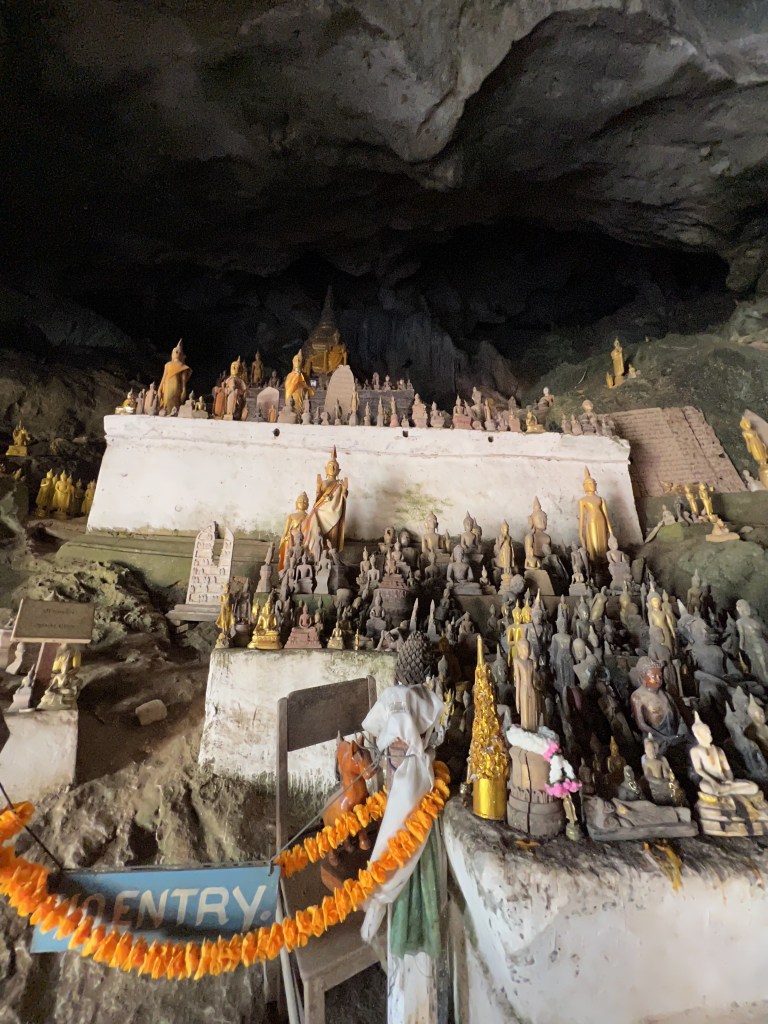
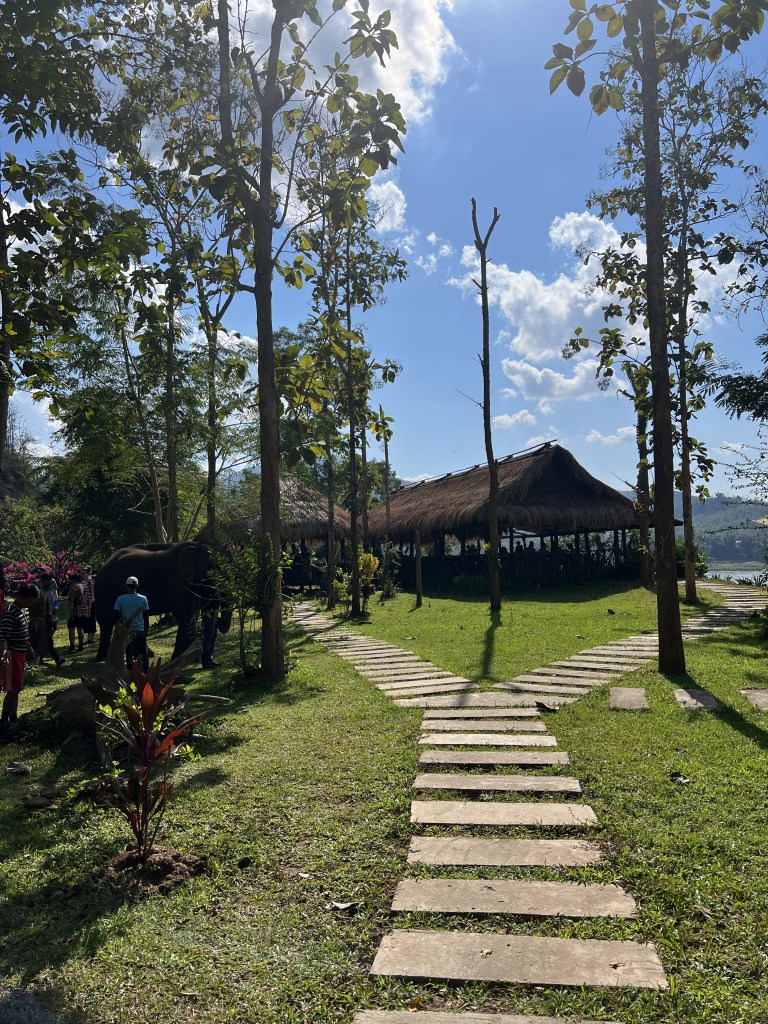
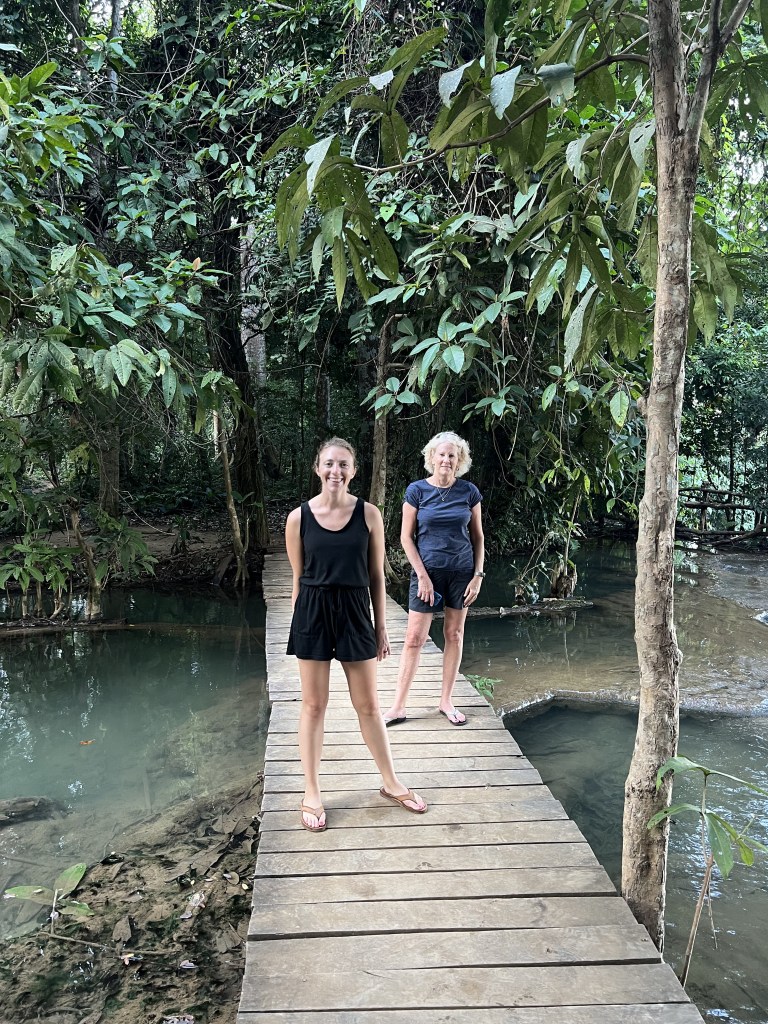
Not to be outdone by the slow boat journey from Thailand, our first tour took us back up the Mekong to explore some of the towering rock formation along the river, as well as an ancient cliffside cave complex called Pak Ou in which hundreds, if not thousands, of wooden Buddha sculptures have been placed over the years. From there, after a quick pitstop for lunch at a small elephant sanctuary (another notch in the ol’ elephant belt) we were shuttled to Kuang Si Falls, one of the more popular tourist attractions in the area. Despite it being quite crowded with fellow tourists, including a few familiar faces from our original slow boat journey, the falls were absolutely beautiful and a nice way to cap off the tour.


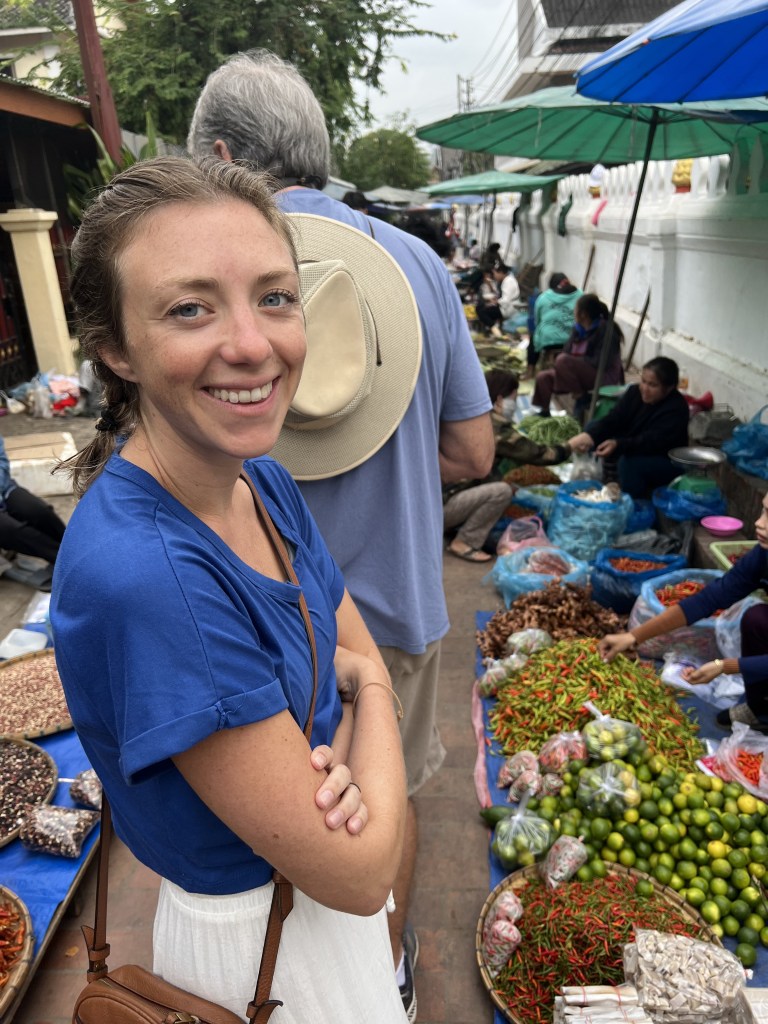
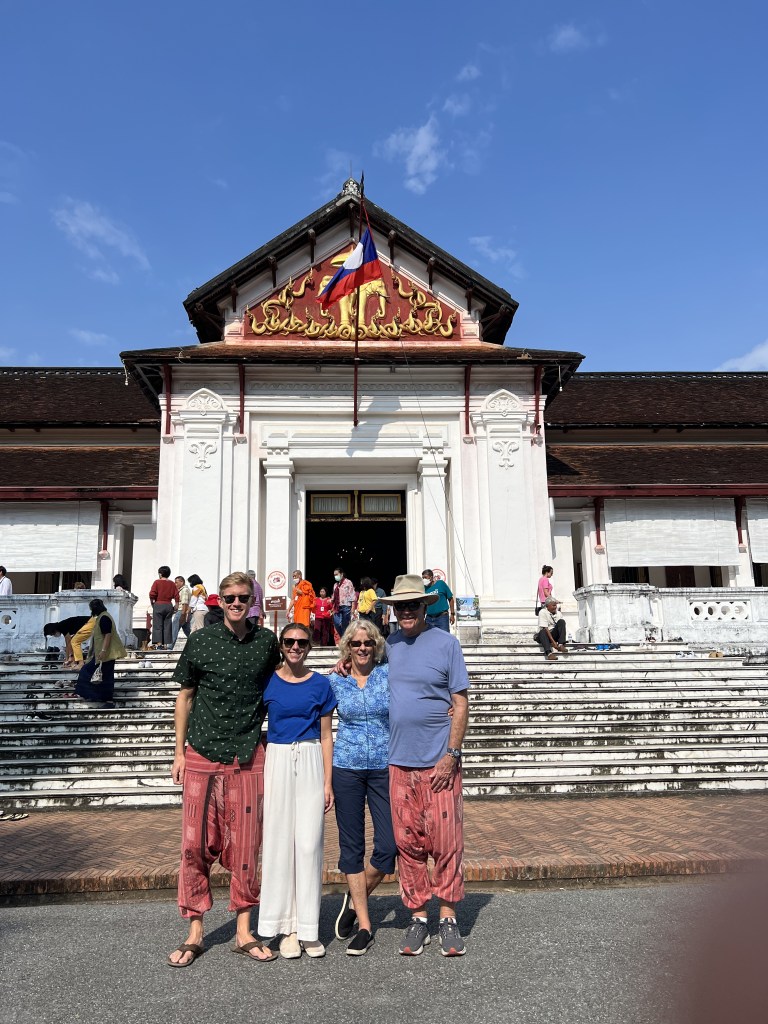
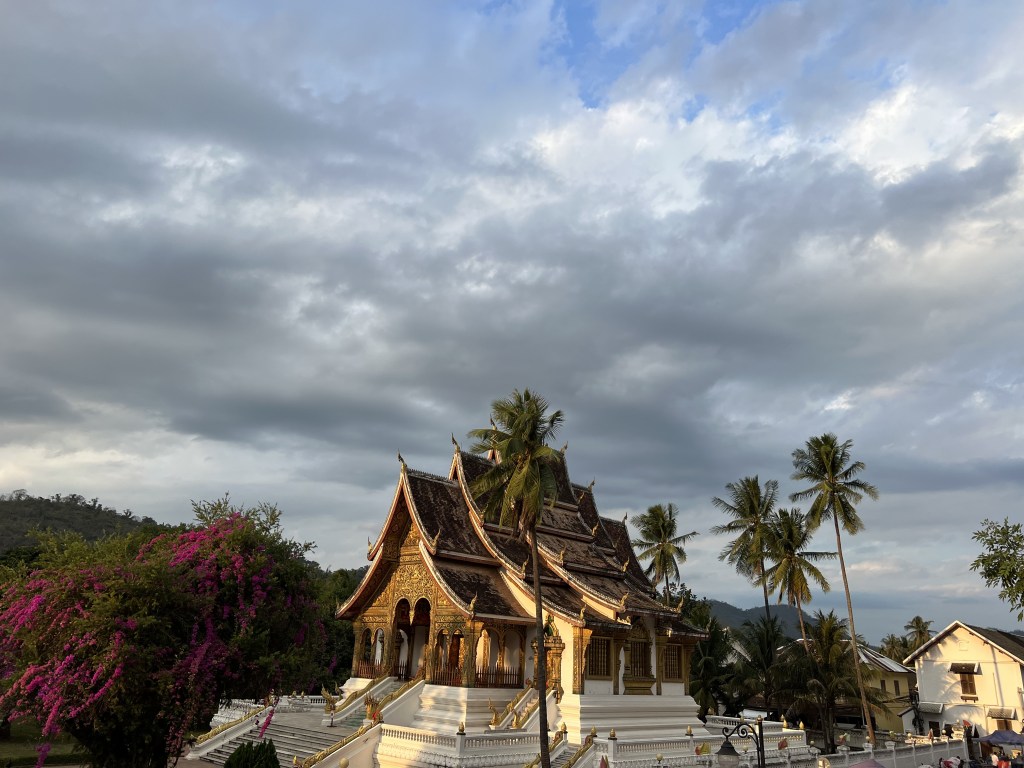
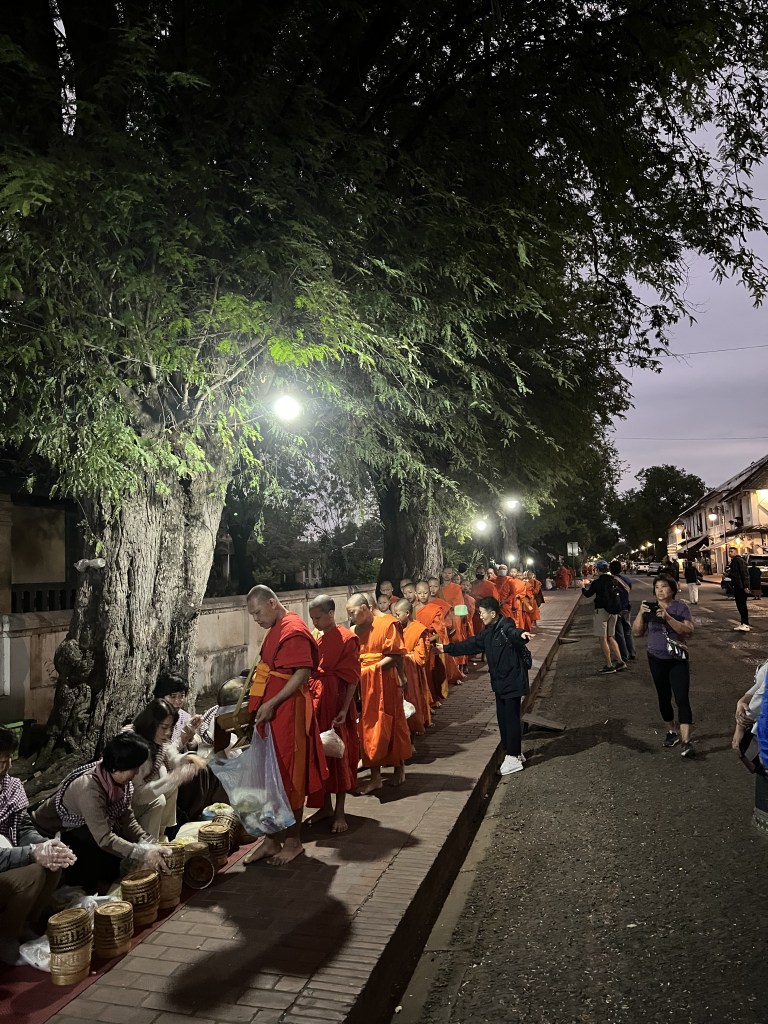
For the rest of our time in Luang Prabang we kept it closer to home. We explored local markets, the former Laos royal palace, and visited some of the most significant temples in the entire country. We even managed to get up at the crack of dawn one morning to witness the longstanding tradition of Morning Alms, during which Buddhist locals offer food (usually sticky rice) to monks who walk along the streets.
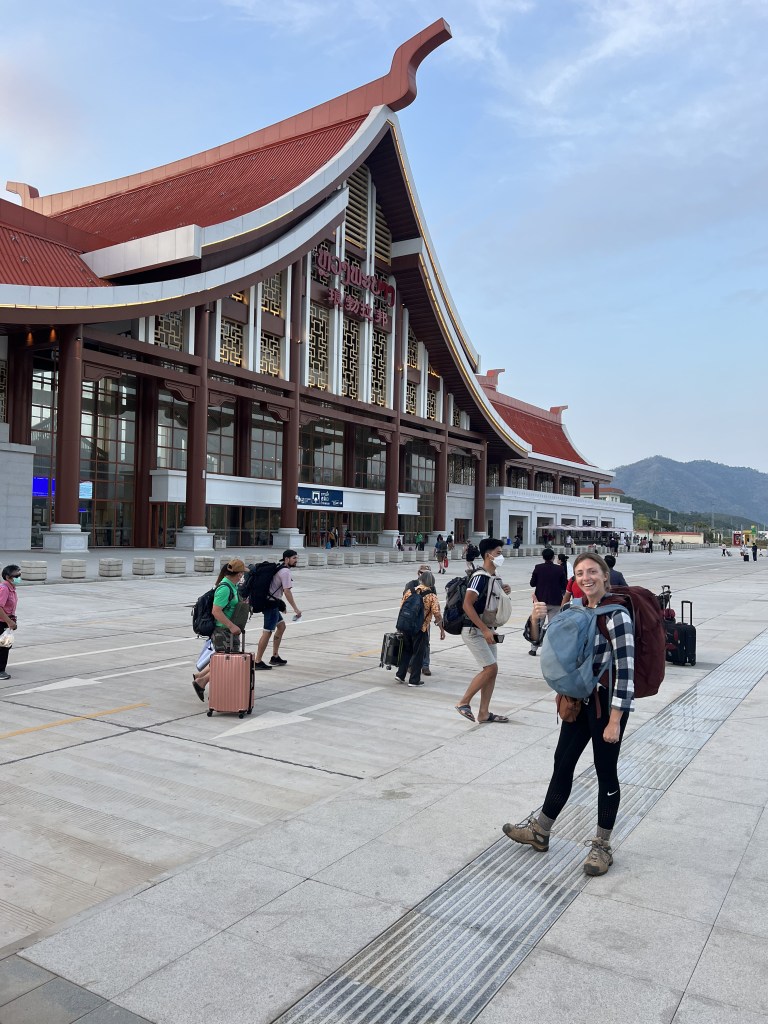
Following our three days in Luang Prabang it was time to head south to Vang Vieng. Up until recently the most common way to make the journey was by a four hour van ride through winding, carsick-inducing mountain roads. However, through an investment from China, Laos opened a high-speed rail network in December 2021 that connects the northern China border with the capital city of Vientiane. The strange quirk (for foreigners at least) is the only way to buy tickets are through local agencies who also arrange transport to the station, about 30 minutes from town. Regardless, it cut the travel time to Vang Vieng down to less than an hour, we’ll take that every time.
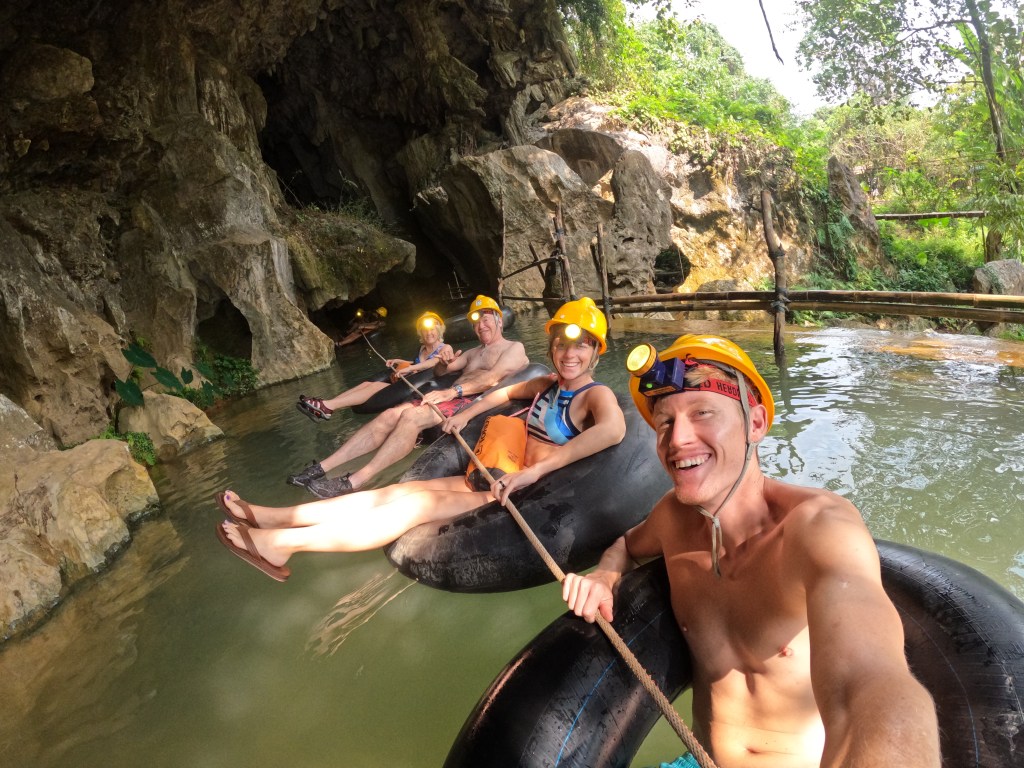
In recent history Vang Vieng has had an interesting relationship with tourism. In the late nineties after an enterprising local introduced river tubing to the Nam Song River that flows through town, bars started popping up all along the waterfront to cater to the increasing number of young backpackers coming to the area. Cheap booze + rope swings + a rocky river bottom = a lot of accidents. Apparently it got so bad that by 2012, 20 to 30 foreign tourists were dying every year. Shortly after, the government shut everything down and closed the riverside bars. While there is still some tubing on the river, Vang Vieng is now much more mellow overall. It’s been reinvented as the adventure / eco-tourism capital of Laos and seems to be getting increasingly popular once again (with a more diverse crowd). As you can imagine, tourism is incredibly important for many areas of Laos and in speaking with locals, we learned just how difficult the COVID pandemic has been for the people here. This made us even more acutely aware of our own privilege being able to travel to this part of the world. Luckily tourism continues to bounce back.
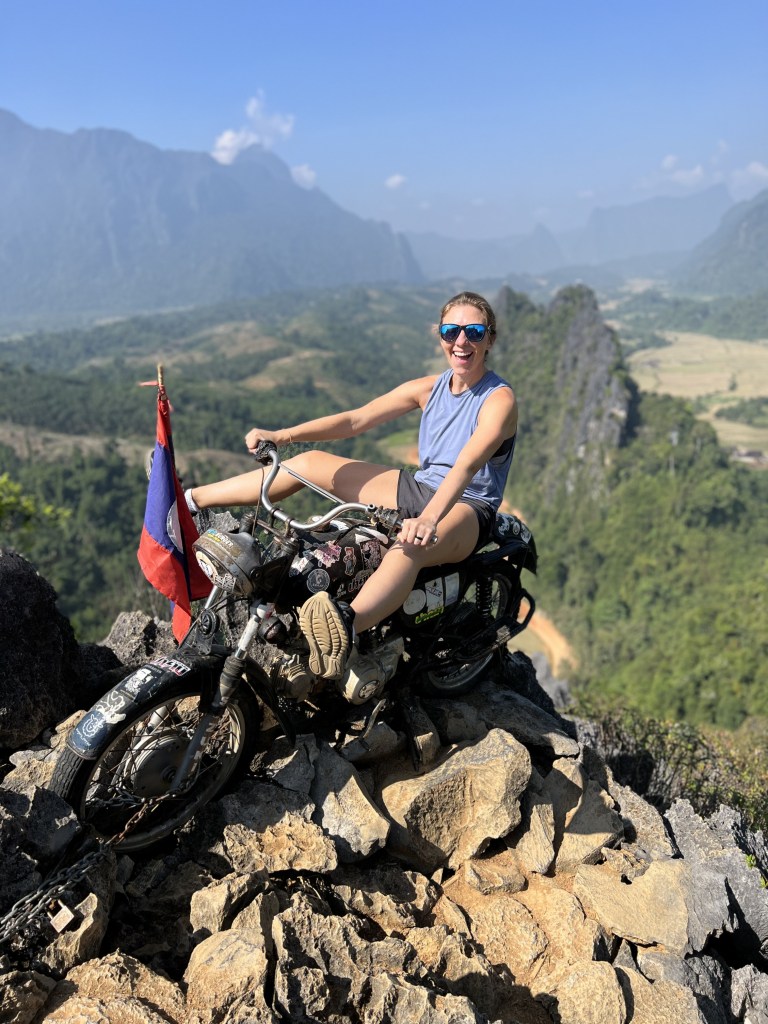
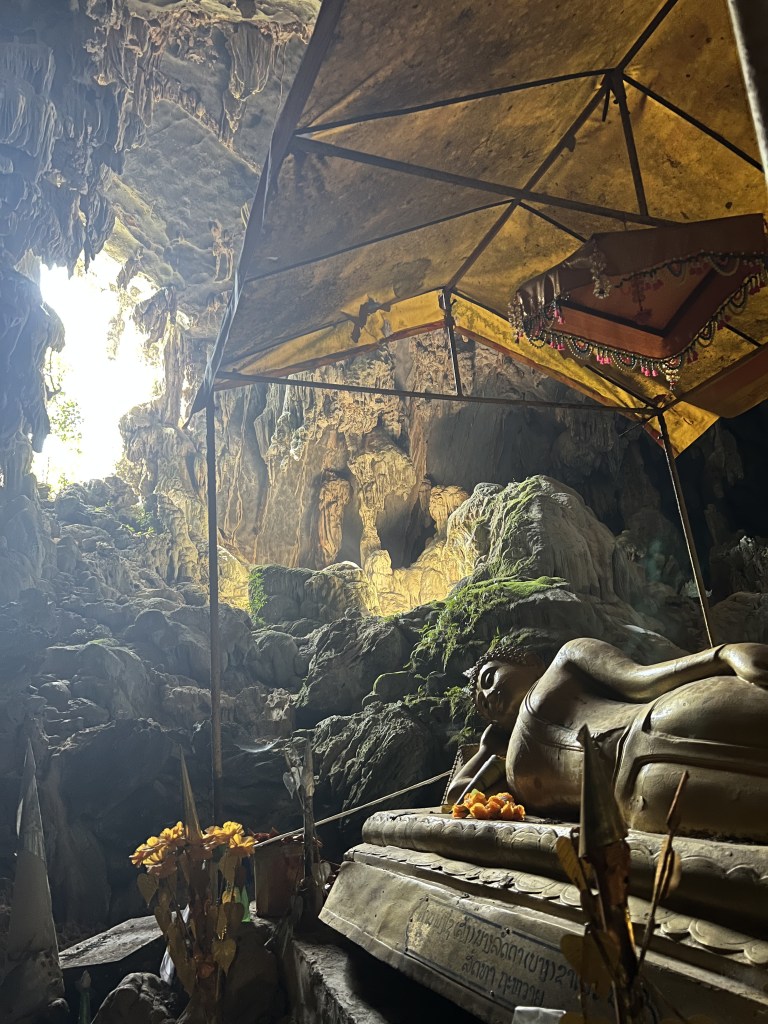
There is quite a bit to see and do in Vang Vieng beyond the river (although kayaking and “safer” tubing are both still popular) and we covered A LOT of activity ground over the course of our four days. We scaled some near-vertical hiking trails up narrow limestone mountain faces to catch some amazing views, explored extensive cave complexes, swam in natural “blue lagoon” springs that are dotted throughout the area, biked (kinda brutal on crappy roads) through nearby villages, and even tossed in some zip lining for good measure. It might not be the party-central it once was, but early thirties Abby and Ian give Vang Vieng two thumbs up.




Our final planned stop in Laos was a short two-night stay in Vientiane. As before, David and Dianne booked our train tickets through a local agency who also arranged hotel pick up and drop off at the station. However, once we were picked up and on our way, Dianne looked and realized the agency screwed up and bought tickets not to Vientiane but back to Luang Prabang! While we were able to catch a different train a few hours later, it was a slower moving, and very crowded, regular train – no better way to get acquainted with the locals. Despite the hiccup, 90 minutes later we arrived in Vientiane.
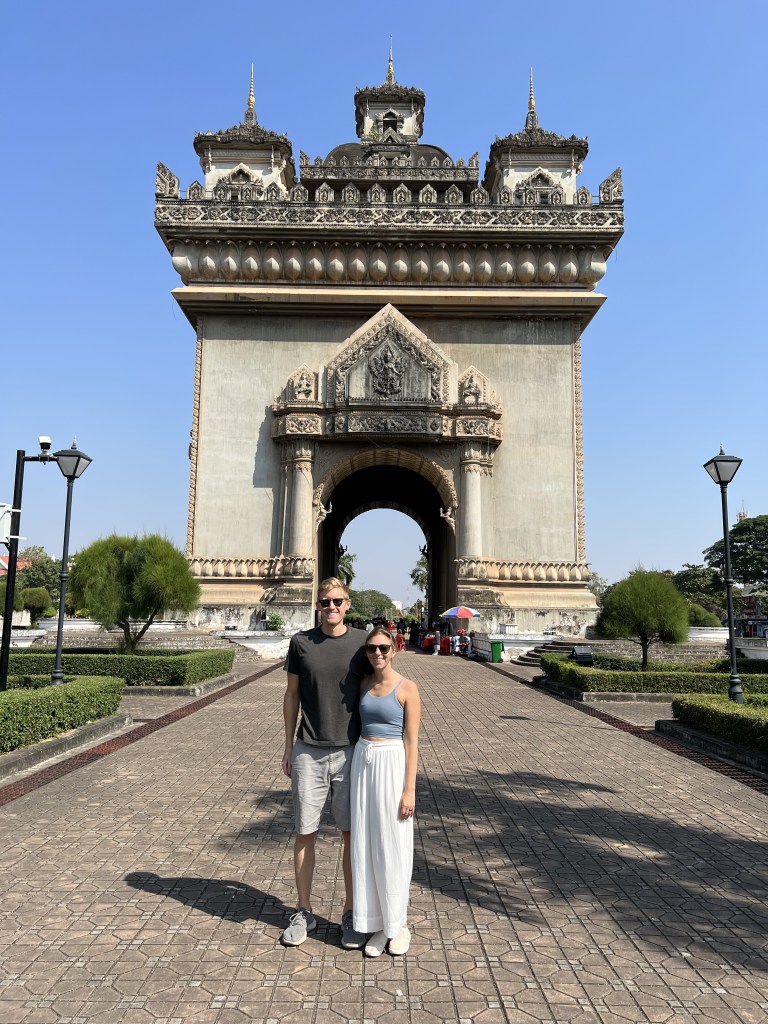
Despite Vientiane being the capital, it’s often skipped on Laos travel itineraries since it’s seen as just a big-ish city with not a lot to do compared to other parts of the country. Regardless we still had a nice time simply walking around visiting a few recommended landmarks and capped it off by watching the World Cup Final (10pm start time in Laos) with some locals at a nearby hotel bar. Go Argentina!
Next stop – Vietnam!
 Now or Never
Leave a comment